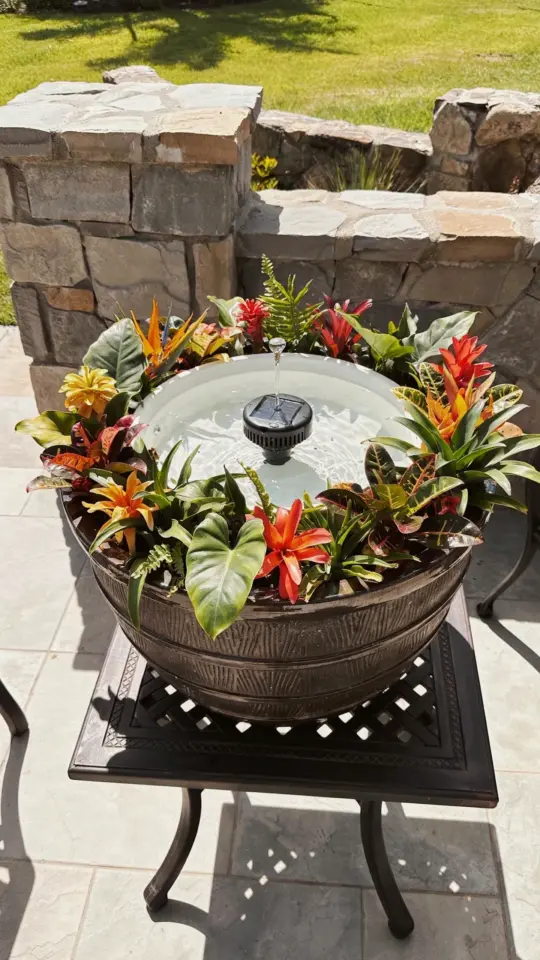
If you recently bought a solar fountain and it sputters or stops after an hour, you might be making the most common mistake with this garden feature. That mistake is placing your solar fountain in a shady spot. I made this error myself when I first tried one, and it took me a frustrating week to figure out why the water barely trickled. The simple truth is that a solar fountain needs direct, unfiltered sunlight to run consistently. Without it, the pump simply cannot build enough power. Once I moved mine into full sun for at least six hours a day, the difference was night and day. Now I want to help you avoid that same headache.
How Much Sun Does a Solar Fountain Really Need?
The short answer is at least six hours of direct sunlight. But that “direct” part matters more than most beginners realize. Sunlight filtered through tree leaves or a sheer curtain on a window will not deliver enough energy to keep the pump running at full speed.
I have found that morning sun is actually better than afternoon sun for many fountains. Morning rays are less harsh on the pump and the water stays cooler, which reduces evaporation. If you can give your fountain sun from 8 a.m. to 2 p.m., you will get a steady flow until late afternoon. On cloudy days, expect the output to drop. That is normal. The key is to prioritize a spot that gets bright, unobstructed sun for the longest stretch.
Where to Place Your Solar Fountain for Best Results
Before you unpack your fountain, walk around your yard at different times of the day. Watch where the sun falls and note any shadows from trees, fences, or buildings. A south or west facing spot usually works best in the Northern Hemisphere. For the Southern Hemisphere, aim for north or west.
I recommend placing the fountain on a flat, stable surface like a patio stone or a sturdy table. Avoid grass if you can, because grass can block the bottom of the solar panel if the fountain is low to the ground. A slight angle toward the sun also helps. Many solar panels have a small tilt bracket, so use it to point the panel directly at the sun around midday.
- Check the spot at 9 a.m., 12 p.m., and 3 p.m. to confirm no shade creeps in.
- If your fountain has a separate solar panel, you can place that panel in full sun and the fountain itself in a shadier area nearby.
- Avoid spots under eaves or overhangs that cast shadows even when the sun is high.
What Happens When You Put a Solar Fountain in the Shade
When the solar panel cannot get enough light, the pump receives low voltage. It may start weakly, then stop when a cloud passes. You might see bubbles but no real water stream. The pump may also make a buzzing sound because the motor is trying to run but lacks power.
Another sign of too much shade is the fountain working only for a short burst right after a sunny hour, then going silent. The pump needs consistent energy to keep water flowing. Shade also means the battery (if your model has one) will not charge fully. This leads to zero performance in the evening, even if you had some sun earlier. Honestly, moving the fountain into full sun is the fastest fix for almost every “not working” complaint I have seen.
Solar Fountain Not Working? Check the Sunlight First
When your solar fountain stops performing, it is tempting to blame the pump or the panel. But nine times out of ten, sunlight is the real issue. Before you return the product or buy a replacement, do a simple test. Wait for a bright, sunny day and move the fountain to a completely open area with no shade at all. Let it sit for an hour.
If the water flows strongly within that hour, then your original spot was too shady. If it still does not work, then you might have a mechanical problem like a clogged impeller or a loose connection. Clean the pump filter and check the water level. But start with the sun test. It saves you time and money.
Tips to Keep Your Solar Fountain Pump Flowing All Day
Once you have the right spot, a few simple habits will keep your fountain running smoothly. First, clean the solar panel every couple of weeks. Dust, pollen, and bird droppings can cut light by a noticeable amount. A quick wipe with a damp cloth makes a real difference.
Second, top off the water regularly. Solar pumps can run dry if the water level drops too low, which damages the motor. Check the fountain each morning, especially on hot days. Third, if your fountain has a rechargeable battery, let it fully charge in direct sun for two or three days before expecting evening performance. Patience pays off with these gadgets.
One more tip: use distilled water if your tap water is very hard. Mineral buildup can clog the pump over months. Clean the pump nozzle with a soft brush every month to keep flow strong.
Matching Your Solar Fountain to Your Garden Style
Solar fountains come in many designs, from tiered urns to simple birdbaths. Choose one that fits the scale of your garden. A tiny fountain in a large yard can get lost visually, while a big fountain in a small corner might feel overwhelming. I prefer styles that match the material of your existing planters or patio furniture. Stone or ceramic fountains blend well with natural gardens, while metal or glass fountains suit modern spaces.
Think about the sound, too. A broad, shallow basin creates a gentle trickle, while a narrow spout makes a louder splash. If you want a calming background noise, go for a wider water flow. For a quiet accent, a small drip fountain works beautifully. Whatever you choose, remember that the sunlight needs to reach the panel, so do not hide it behind large shrubs.
Getting the sunlight right is the single most important step for any solar fountain. Start by finding a spot with at least six hours of direct sun, keep the panel clean, and maintain the water level. You will quickly see a steady, happy fountain that adds life to your garden. Try moving yours today and see the difference for yourself.
#solarfountain #gardendecor #outdoorliving #waterfeature #gardeningtips
Leave a Comment